
Anderson City Directory Holdings
Anderson city directory holdings are split among local microfilm, State Library print and film, and selected online scans. Years are irregular. A gap between editions is a collection gap, not proof that a household left Anderson. Start with the closest year, then move both forward and backward.
| Collection | Years | Where Held | Access |
|---|---|---|---|
| Local directory microfilm | 1876–77; 1894–95; 1899–1900; 1902–1915 | Anderson Public Library Indiana Room | Non-circulating, in person; copies or photos under library rules |
| State directory series | Anderson series through 2020 with gaps | Indiana State Library | Print, microfilm, and selected digital access |
| Emerson’s Anderson Directory | 1891–92 | Internet Archive and FamilySearch catalog | Free public scan and OCR |
| Companion local collections | Various dated runs | Indiana Room and Madison County Historical Society | Microfilm, images, maps, yearbooks, newspapers, and staff help |
The official holdings did not reveal a separately titled Anderson reverse or criss-cross series with verified years. Later address sections may still work in street order. Ask the Indiana Room about telephone books, vertical files, or local indexes before assuming such a volume exists.
Use Anderson’s Indiana Room
The Anderson Public Library Indiana Room is on the second floor of the Main Library at 111 E. 12th Street. Listed hours are Monday through Thursday, 10:00 a.m. to 7:00 p.m., and Friday, 10:00 a.m. to 5:30 p.m. It is closed Saturday and Sunday. Call 765-641-2442 or email indiana@andersonlibrary.net before a long trip.
The room does not circulate its local material. Non-flash photos, scans, and copies are allowed under library rules. Staff offer 30 to 60 minute genealogy appointments and answer remote questions, but they do not perform extensive research. Handouts include Genealogy 101, house-history guides, a collection guide, and vertical and horizontal file indexes.
The library’s page gives the clearest entry to Anderson city directory research.
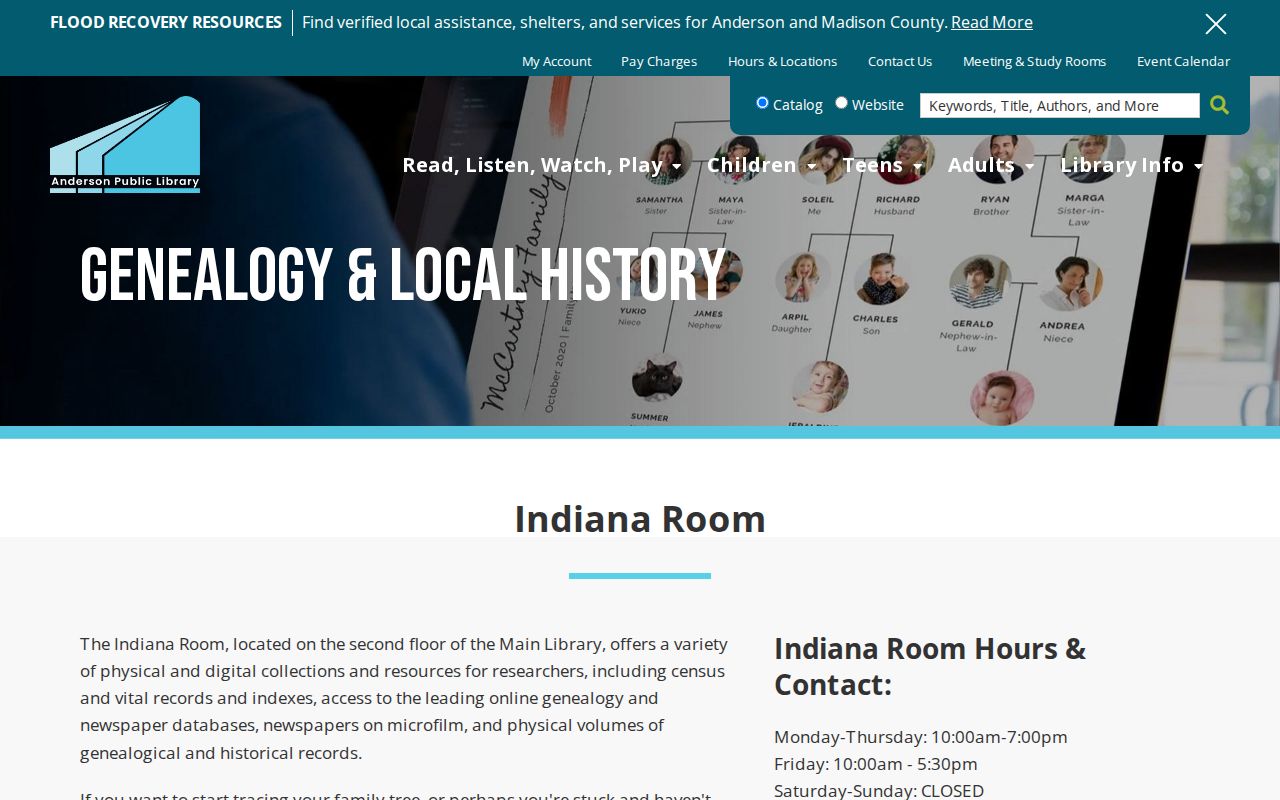
The screenshot identifies the local-history service behind the shelves. Bring names, year ranges, variant spellings, and known addresses so staff can point to the right book or reel.
Open Anderson’s Emerson Directory
The best inspected digital sample is Emerson’s Anderson Directory, 1891–92. Its 740 pages contain an abbreviation key, alphabetical resident entries, a classified business section, a street directory, a Madison County gazetteer, and post-office, telegraph, and express listings. The FamilySearch catalog also identifies the volume.
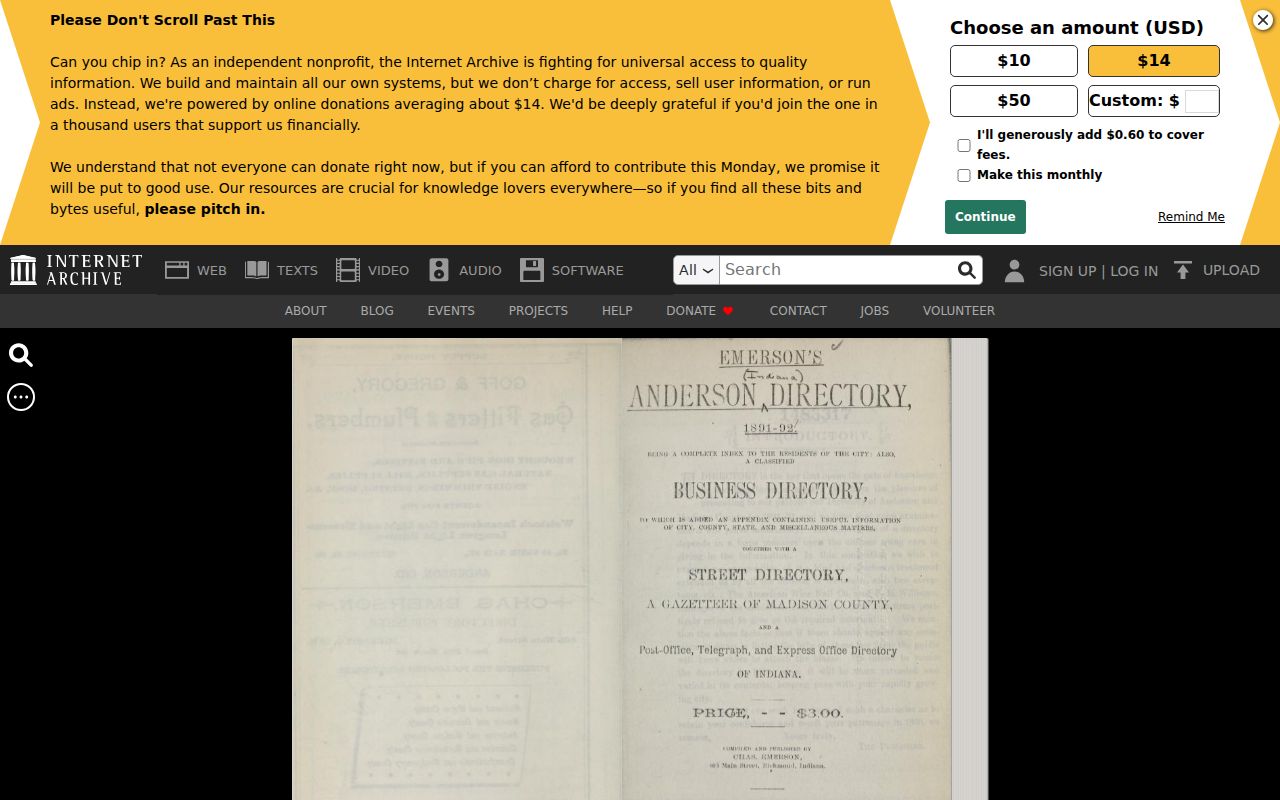
The image shows the archive route used to inspect the volume. Page images can be skewed, and OCR may split or miss words, so compare the text search with the scanned page.
The preface says the compiler relied on residents’ information and names two firms that declined to provide it. An absent name can mean omission, spelling trouble, or no response. It does not prove the person was absent from Anderson.
Read an Anderson Directory Entry
A city directory entry compresses several facts into one line. Read the volume’s key before expanding any abbreviation. In the inspected Emerson book, entries can include a person’s name, a spouse or widow relationship, occupation, employer or workplace, residence, business address, and street or corner direction. No birth date or telephone number appeared in the inspected examples.
| Name | Printed surname and given name; retain the source spelling. |
|---|---|
| Status or relationship | May include a spouse reference or widow notation. |
| Work | Occupation, employer, workplace, or business address when supplied. |
| Residence | A dated residence or street-corner description, not current-address proof. |
| Source mark | A period notation should be explained in historical context, not applied as a modern label. |
- Criss-cross directory
- A directory arranged by street and address so a place can lead to a listed name.
- Householder index
- An address-order list centered on household names rather than every person at the address.
- Abbreviation key
- The publisher’s legend for shortened occupations, relationships, directions, and address terms.
One notation is unique enough to prevent a bad transcription. In the 1891–92 volume, a number before the second street means doors from a corner. Thus “6 s 3d 2 w Washington” is a relative location, not a house numbered 623.
Extend Anderson Directory Research
The Indiana Room microfilm index reaches far beyond directory volumes. It lists federal census films, Soundex, local land deeds, mortgages, tax duplicates, estate dockets, court order books, school enumeration, funeral registers, maps, and local newspapers. These sets help test whether two similar names belong to the same person.
Record the cabinet or drawer, reel title, year, page, and source wording. A library index is a finding aid, while a Clerk, Recorder, or Health Department holds the original or certified record. Census films provide household details, and deed or tax records provide property relationships. Neither should be silently folded into a directory entry.
Note: The newest full federal census generally open to the public is 1950 under the 72-year release rule.
Check Indiana’s Anderson Directory Series
The Indiana State Library city-directory guide supplies the broader Anderson series through 2020, though gaps remain. Its Madison County research guide adds deed abstracts, land grants, early wills, naturalizations, WPA vital indexes, maps, histories, and newspapers.
The chronology explains why no single Anderson city directory run answers every decade:
- 1823–1840: county formation and early land, deed, and will records precede the located city directory runs.
- 1876–77: an early local directory appears in the holdings.
- 1891–92: the inspected Emerson volume supplies names, streets, businesses, and its corner notation.
- 1894–1915: scattered directory years and local microfilm continue the address trail.
- Later years through 2020: State Library print and film listings extend the series with gaps.
For current address-keyed parcel and deed work, shift to the Anderson street directory workflow. Historical directories should remain dated evidence.
Cross-Check Anderson Names at MCHS
The Madison County Historical Society operates the Museum of Madison County History at 15 W. 11th Street. It is open Monday, Wednesday, and Friday from 9:00 a.m. to 3:00 p.m., or by appointment. Call 765-683-0052 or email madisonchs10@gmail.com before requesting an item.
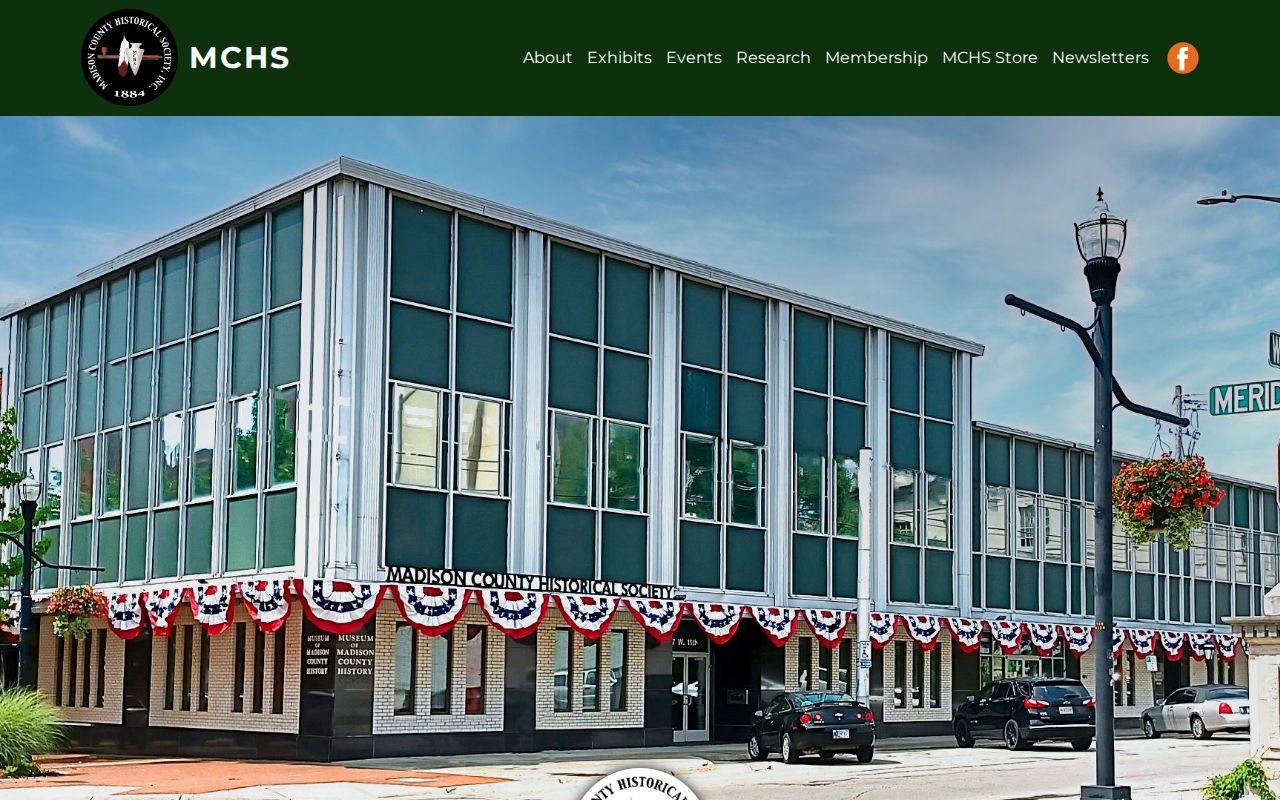
The captured society page points to collections about people, places, businesses, homes, maps, photos, products, and eras. The all-volunteer museum should be contacted before assuming a file is digitized or immediately available.
Its Made in Madison County trail includes a 1908 Anderson Runabout and products tied to General Motors, Sellers, Aladdin, Wright, Red Gold, and L&M. Those names can become search terms in directories, newspapers, photographs, and business sections. Artifact context can distinguish a company address from a household address.
Pair Anderson Directories with Archives
Yearbooks, student indexes, school enumerations, obituaries, cemetery files, and newspapers often resolve a directory name. The library lists school enumeration for 1904–1924 and 1929–1932, graduate records for 1883–1947, bound Madison County obituaries for 1968–2025, and several Anderson newspaper runs. Publication dates and index quality vary.
The State Library’s WPA birth and death indexes cover 1882–1920, while its marriage index covers 1880–1920 with supplements. These are leads, not certified copies. FamilySearch’s Indiana marriage collection displays 27,727 Madison County records in its coverage table and labels images as unofficial genealogical copies. Verify a marriage with the Madison County Clerk.
Church material can also help. Indiana Historical Society resources identify Anderson Monthly Meeting and Fall Creek Monthly Meeting records tied to Madison County. Confirm the exact congregation and date range with the repository.
Trace Family in Anderson Directories
Family history works best when each city directory result is treated as one dated observation. Begin with the clearest spelling and a narrow year range. Then compare the alphabetical entry with the street section and one independent source.
- Search the nearest directory’s alphabetical section. Save the exact title, year, page, spelling, entry text, and scan or film status.
- Check the street section and abbreviation key. Record corner notation without converting it to a modern number.
- Move through the next available years in both directions. Note residence, work, spouse or widow text, and gaps without guessing why the name vanished.
- Pair the directory years with a public census, newspaper, obituary, school file, deed, or court record. Match dates, relatives, and locations.
- Request an original or certified record from the custodian when the conclusion depends on legal proof.
A person can disappear because the next volume is missing, the compiler omitted the entry, OCR failed, the spelling changed, or the person moved or died. Only a second dated source can separate those possibilities. A directory address is not proof of title, continuous residence, or a current location.